
Insights from Sydney and Brisbane
Discussions around smart cities are often dominated by technology, including digital twins, IoT, and BIM. However, focusing on tools alone overlooks a more decisive factor: how these technologies are actually used in practice and what benefits they can bring to an organization.
Looking at Australia offers a different perspective. The distinction lies not in the tools themselves, but in how consistently they are embedded into planning, decision-making, and day-to-day operations.
This becomes particularly evident in the context of the German Smart City Delegation 2026 to Sydney and Brisbane, where Framence was represented on site. The trip was organized by the German-Australian Chamber of Industry and Commerce (AHK Australia) at the invitation of the Federal Ministry for Economic Affairs and Energy (BMWE).
The program brought together public institutions, infrastructure authorities, research organizations, and industry players, providing direct insight into how digital and sustainable urban development is implemented in practice, particularly in the context of the upcoming Brisbane 2032 Olympic Games.
Urban development at the scale of entire systems
Australia’s approach to infrastructure is shaped by a clear structural challenge: sustained population growth. According to the Australian Bureau of Statistics, the population is expected to reach around 30 million by the early 2030s. This growth is concentrated in urban areas, increasing pressure on transport systems, housing, and public infrastructure.
In response, infrastructure is planned at a system level. Meetings with Infrastructure NSW, a government agency responsible for planning and overseeing major infrastructure projects in the state of New South Wales, highlighted how the state is actively coordinating large-scale investments to modernize and digitize infrastructure across sectors. Projects are not treated in isolation, but as part of long-term development strategies.
This approach becomes particularly visible in the work of the Bradfield Development Authority, a government development organization responsible for building a new city region around the Western Sydney International Airport. Here, an entirely new city is being developed on a greenfield site, with urban planning, infrastructure, and digital systems designed together from the outset rather than connected retrospectively.
Smart cities are defined by their outcomes
One of the most relevant insights from Sydney can be summarized in a simple statement:
“Smart cities are not about technology; they are about the inhabitants.”
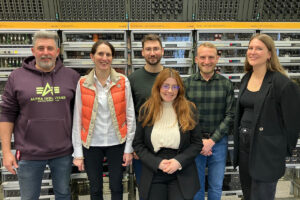
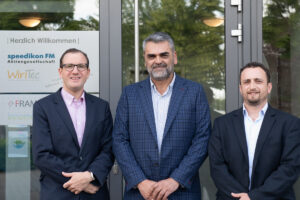
This perspective was emphasized in discussions between Framence’s management team and local stakeholders, reflecting how urban innovation is approached in practice. Digital tools are introduced to address concrete challenges, such as increasing passenger volumes, more complex infrastructure systems, and higher expectations for sustainability and quality of life.
Digital twins as an operational decision layer
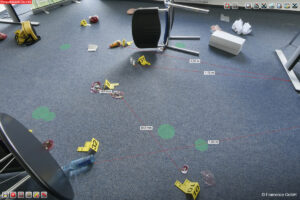
At the Cross River Rail Delivery Authority, a government project organization responsible for delivering one of the largest rail infrastructure projects in Queensland, digital twin technologies are used not only to ensure construction quality, but also for simulation, training, testing, and user experience analysis. Instead of being limited to planning, the digital model evolves alongside the project and supports multiple phases of the lifecycle.
These approaches are already being applied in customer projects using FRAMENCE and have proven effective in real-world use. Assets can be planned and documented, measurement data can be captured, planned and actual conditions can be compared directly, and live operational data can be integrated into a single visual interface, without the need to switch between multiple third-party systems.
If you would like to explore concrete use cases, feel free to get in touch. We would be happy to share relevant user reports with you.
From research to real-world application
Another defining characteristic is the close link between research and implementation.
At the University of Queensland, research teams are working on digital twins and urban system simulations to improve infrastructure resilience and performance. For example, simulation models are used to analyze how transport systems respond to increased demand or how infrastructure reacts to extreme weather conditions.
These insights are not developed in isolation but are directly applied in infrastructure and urban development projects, ensuring that new methods are tested under real-world conditions.
Planning beyond the project
The Brisbane 2032 Olympic Games are not treated as a short-term infrastructure program, but as a catalyst for long-term urban transformation. According to the Queensland Government, investments in transport and infrastructure are aligned with long-term development strategies to ensure continued use beyond the event.
From the outset, the focus is on how newly built and modernized venues can continue to be used effectively in the long term. Many of the planned stadiums and facilities are designed to remain in use after the Games, serving community sports, cultural events, or as multifunctional venues. The goal is to create economically viable and socially relevant infrastructure rather than temporary event-specific structures.
This creates a clear development trajectory. Infrastructure projects are planned as part of a broader system, reducing rework and ensuring long-term relevance.
Where this creates opportunities
For German companies, this creates clearly defined opportunities.
There is strong demand for capabilities in:
- structured digital planning (BIM)
- integration of infrastructure and asset data
- sustainable construction methods
- and coordination across planning, construction, and operations
At the same time, expectations go beyond individual tools. What is required are environments in which data from different sources can be connected, structured, and used in context.
The speedikon Visual Intelligence Platform (VIP) addresses this need by bringing together geometric and alphanumeric data, technical information, 2D, 3D, and GIS data, live data, third-party systems, cadastral information, maps, and plans into a single environment. Developed by speedikon FM AG in collaboration with a client, the platform enables all stakeholders to access relevant information in context and directly linked to assets and locations, instead of navigating between multiple systems.
This is particularly important in markets like Australia, where large-scale infrastructure projects require consistent data across planning, construction, and long-term operation. The ability to connect information and make it usable across teams and project phases is no longer an advantage, but a prerequisite.
From data to decisions
What would change if you could access your assets anytime, from anywhere, exactly as if you were on site?
If you would like to find out more, feel free to get in touch. We would be happy to show you in a no-obligation demo how unified, data-driven environments enable better decision-making at every level.